Blog

You Are Who You Choose to Spend Time With: On environment, language, and the conscious reshaping of our intellectual lives

Victor Tan
 

“You are the average of the five people you spend time with.”


I spent some time this morning reflecting on this familiar adage, turning it over in my mind alongside thoughts about my friendships and the trajectory of my life.

The more I considered it, the more profound it became. There’s no question that the people we spend time with shape our norms, expectations, and capabilities in ways both subtle and substantial.


The Environmental Architecture of Language

If decades of academic research into human language acquisition have taught us anything, it is this: we are deeply shaped by our environment.

The language parents speak to their children from birth forms the very first linguistic memories a child absorbs and later replicates through imitation.

Those of us who did not grow up with English as our first language understand this viscerally.

A child in rural China or India has no incentive to speak English daily—the environment provides none. Instead, they navigate the world through Mandarin, Tamil, or any of the myriad languages that form the rich tapestry of human communication.

The language spoken at home becomes the linguistic lens through which they view the world, shaping not only vocabulary but values, moral frameworks, and even which dictionary—English or Malay—they might one day reach for.

The Limits of Environmental Determinism

Of course, human beings are not merely products of their environments. Individual agency matters profoundly.

From Mandarin-speaking environments have emerged scholars of English literature. Jiang Zemin, former General Secretary of the Chinese Communist Party, rose from destitution to master multiple languages and lead a nation. The mathematical prodigy Srinivasa Ramanujan, working in isolation from formal training, revolutionized mathematics through sheer intellectual force.

Critics of environmental determinism might invoke Noam Chomsky’s concept of the “poverty of the stimulus”—the observation that the linguistic input children receive from parents and caregivers cannot possibly account for the full complexity and creativity of their eventual language use. There must be something more, something internal, that drives our development.

This is true. And yet, it would be unwise to discount the profound role environment plays.

Explicit Rules and Tacit Knowledge

Traditional education tends to emphasize explicit rules: grammatical structures, punctuation conventions, the mechanics of avoiding comma splices. These are lessons that can be taught systematically, absorbed from textbooks, and applied with conscious effort.

But ask someone truly proficient in English—someone whose prose flows with natural eloquence—to explain why a particular turn of phrase works, and they often struggle to articulate it. I’ve observed this phenomenon countless times when questioning students who write exceptionally well. They cannot always explain their choices. They simply know.

This is tacit knowledge—the accumulated wisdom of countless interactions, texts read, patterns absorbed, habits compounded over time. It reshapes how we process, understand, and ultimately articulate language in ways that resist codification. It operates beneath conscious awareness, yet powerfully determines our linguistic capability.

Probability Is Not Destiny

Yes, someone living in an environment devoid of English speakers will very probably never speak English. The probability is higher. Much higher.
But probability is not destiny.

As human beings, we possess a remarkable capacity: we can reshape our environments. We can change whom we interact with, whom we spend time with. Those five friends—whether from family, school, workplace, or public life—can be consciously varied.

Are we not free to choose? Must we accept environments that limit us? Should we settle for spending time with those who refuse to grow, who remain content with mediocrity? Or can we seek out people who share our goals, motivations, and aspirations for excellence?

That conscious choice shapes our trajectory. And it is a choice we must recognize we possess.

Beyond People: Reshaping Your Linguistic Landscape

But environments consist of more than just people. We can also reshape the content we consume, the words we encounter daily.

It is not destined that we spend our days doom-scrolling through social media captions and Instagram reels. We have the option to read substantive blog posts, to engage with the great books that have shaped human thought across centuries – to expose ourselves to good writing and to speech and things that more represent what we want to be as we move from where we are towards a better life.

This is the harder choice, of course. Most people don’t make it.

But precisely because it is both harder and more beneficial, it holds the key to the mastery that so many casually abandon. The path less traveled rewards those brave enough to walk it.

By reading this post today, you’ve already begun to reshape your environment in small but meaningful ways.

Thank you for being part of this journey.
If you’d like to extend that commitment, I invite you to explore our vibrant member section, where you’ll find sample works, detailed resources, and a community dedicated to linguistic excellence and intellectual growth.

Whether you’re writing from Beijing or Bangalore, Cape Town or rural Kentucky, you’re welcome to join us in consciously reshaping the environment of language and thought we inhabit.

The choice, as always, is yours.


Join our Premium Member Section and shape your life today!

There Are No Miracle People: The Myth of Being “Naturally Good at English”

Victor Tan
 

In a recent class, I talked to some of my students about Greek myths – specifically the myth of Daedalus and Icarus, and I think myths are really cool, the students really liked it, and I think I’ll probably do it again. And so today, what I want to talk about is another myth, and that will apply to many of you out there, the myth of being naturally good at English. 

Now many of you out there are reading this, possibly as second language speakers, or people who just haven’t been doing your best on the First Language English exam, to the point that you need help, you need assistance. 

There’s nothing to be ashamed of, but along the way, some of you may have developed the attitude that maybe some people are just naturally good at English. 

You might think, wow, these people just had a natural talent from the outset, wow, these people had a natural talent from the start, how can I possibly compete? 

It’s fate that they’re doing better than me, and all I can do right now is just read this website so I can get last-minute tips before the exam. 

Uh-huh, I know some of you… All too well!

One thing though… It’s not true. 

Unfortunately though, a lot of people believe it – This idea that there’s an insurmountable divide between those who have talent and those to whom it was not given. 

People blaming themselves for not having talent, declaring that it was fate that they weren’t able to do well, making any number of excuses. 

I won’t say that talent doesn’t exist, because that would be disingenuous, a lie to you and me, but in times like these, I do like to think of a famous scholar from an entirely different discipline –

Physics.
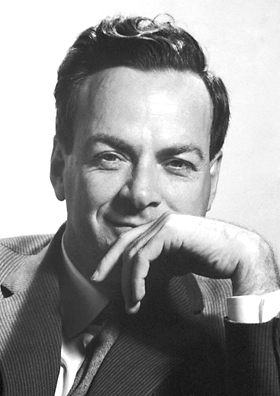
And with that in mind, I present you the great polymath and scholar Richard Feynman. 

Feynman was an incredible science educator. Feynman was the creator of the legendary theory of quantum electrodynamics, otherwise known as QED, which describes how light and matter interact with one another. 

Widely regarded as one of the smartest people in the world, his contributions have revolutionized the entire world, and continue to do so in fields such as quantum computing, nanotechnology, laser technology, and so on. 

But why I mention him is none of these reasons: It is because of this 50 second YouTube clip, There Are No Miracle People. 

You can go ahead and watch it right down here, and I guarantee you that it will be a better watch than the majority of the 20 minute long, drivel laden motivational videos that you watch on YouTube.

In the video, Feynman says quite simply what I believe: 

“There are no miracle people. It just happens they got interested in this thing and they learned all this stuff. They’re just people. There’s no talent, a special miracle ability to understand quantum mechanics”… and you can substitute that with English… “or a miracle ability to imagine electromagnetic fields that comes without practice, and reading, and learning, and study.” 

I’ve found that that’s true, most assuredly, for almost all of my students. The students of mine who have done the best are the students who have dedicated time towards actually learning the English language. 

And of course you might say, teacher Victor, that’s unreasonable. 

How could you tell people to study day in day out? We all need our lives.

And to that I say, the very idea of First Language English is that you use it in your day-to-day life. Why should an exam that’s dedicated towards assessing your capability to use English as a first language not test your ability to take in your day-to-day conversation and all the things that come into your life on a day-to-day basis? 

Was it supposed to be easy or trivial? Were you supposed to just read this site or get a premium membership and then gain the grade that you wished for?

Sorry, but it’s not that easy.

By spending more time with English, you will gain so many opportunities that you will scarce be able to even count them. 

But whether you can capitalize on those opportunities or not comes down to recognizing what an opportunity actually is. 

It comes from seeing that that movie, that K-drama, that song, or that interesting article about a celebrity that almost nobody cares about except you, is a potential source of reading, listening, speaking, and writing material to inspire your thoughts and to give you things to think about in the English language. 

A lot of this really is stuff that you’re already doing but you might not interpret it as part of your English learning – and so a huge part of even starting to learn and to become one of those miracle people is to accept that you are constantly in a learning environment, immersed in the English language, and opportunities to develop yourself that you might not see unless you start opening yourself up to the sheer variety of language that exists in this world and that you should learn from. 

When you take that extra step of awareness of how others interact and use language, it will impact your life. 

How people speak, how they think, how they articulate themselves natively in English in order to achieve their purposes, to create effects, whether it’s suspense or anticipation – tell stories that captivate your heart, your mind, and your soul in ways that aren’t exclusive to the medium, whether English, Chinese, Japanese, or whatever it is that your native language is, and that transcends every single medium of discovery. 

Remember that First Language English is not just about your vocabulary and your grammar, it’s about how you use the language. Paying that extra attention and realizing the opportunities for you to learn will enable you to constantly immerse yourself in ways that you may never have anticipated before. 

In closing, I’d like to echo Feynman one more time. 

There are no miracle people. 

Every single one of you who is reading this right now and who will get an A* at the end of the day will have worked hard, will have practiced, will have read papers, will have trained your ears, your tongue, your ability to recognize natural speech patterns, and to put them down on paper even as you go through this process of preparing for one of the most important exams of your entire life. 

Whatever you do though, however you feel right now, and if you take nothing else away from this article, consider this: 

I want you not to cut yourself out by thinking that you couldn’t do it because it was fate, because remember, there never were any miracle people. There were just people who spent more time with the language, who wanted it hard enough. 

True, part of that is a person’s nature, but it’s something that if you are thinking about right now, and if you’ve read all the way to the end, I know that you can bring about in your life, here, now, and today, have some faith in yourself, because I know that if you want to become a miracle person at the end of the day, you can, and you will make that miracle happen and it will not be an accident.

Work hard, my friends – I’m confident that you can create your miracles 🙂

Yours as always,

V.