Writing is cool.
It helps you think about what you want to say, and makes you really articulate those ideas out – I’ve always enjoyed it, the way that it forced me to think: What is the best way to order my thoughts?
How do I get what I want to say out?
The answer invariably begins with this:
I must know what I want to say – I must understand what I want to get across; but at the same time, it is through the process of writing that I think my thoughts out.
It then surfaces to me as it always has:
Writing is thinking.
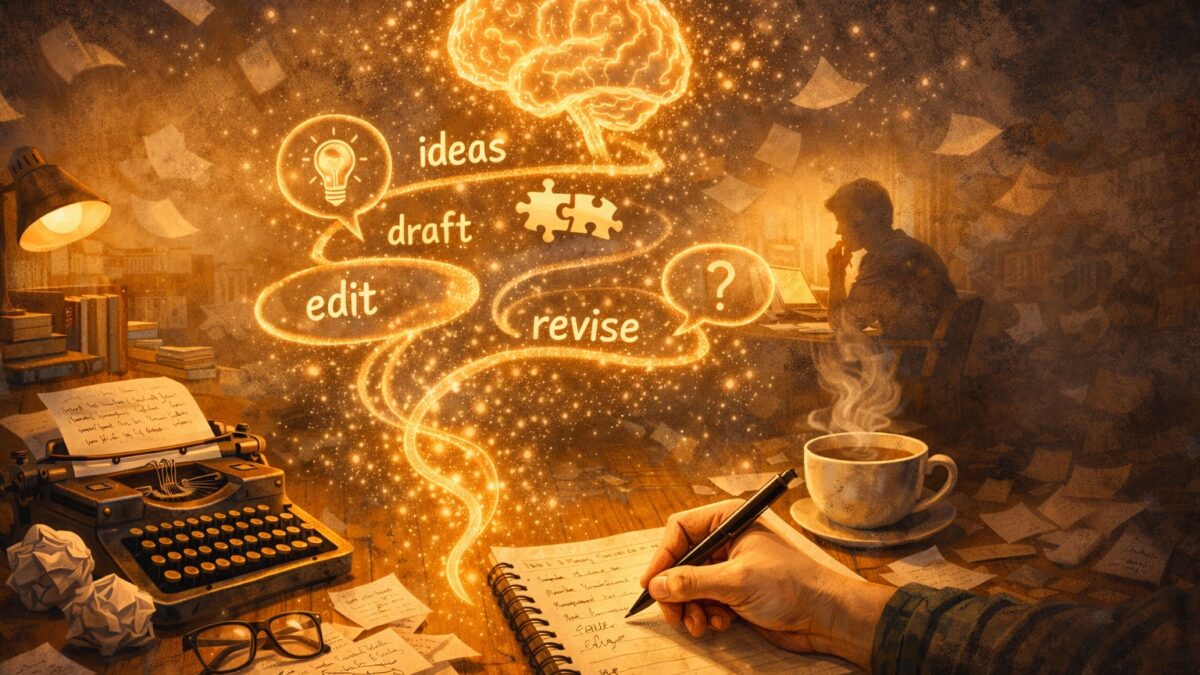
Not all writing is thinking, it’s true – but writing is a very specific form of thinking – a process of looking at the words that you see and repeatedly clarifying them into a cohesive whole.
The reason I emphasize this is that all too often, students think that writing is a magical skill – the words appear out of nowhere as if transported from a magical box; that what comes out of their pens or their keyboards must be perfect and completely formed; that is an understandable mentality, but it is also often a dangerous one; if you think that perfection is what is needed from the very beginning, you are not likely to start, and in not starting, you won’t get better.
Take this essay, for example – it didn’t come about because of something magical that happened on the page; I didn’t transport it out of my grey matter onto the page just because it all already happened to be there – rather, every word and every sentence came about because I was looking at what I had already said, thinking about what would be logical, and then from there, brick by thought-brick, constructing everything that would eventually come to pass, rearranging, finding out what works.
Why does this sentence go well with that sentence?
What does putting this word in front do?
If I use this word and not that word, how does that change the meaning of what I’m getting across?
These are small things that teachers can teach you in part, but that you also need to figure out on your own.
Maybe I’m wrong – Maybe it depends on the teacher?
Sure, that’s possible – but even if it is, you may have to ask yourself:
Can you afford to spend all your time with a great teacher, whether monetarily or time-wise?
If you can, consider hiring me and we’ll go a part of the way together (email at victortanws@gmail.com!) – but the broader point is this:
There are plenty of intangible and small things that life’s challenges present to you that you won’t be able to figure out unless you let your mind operate on a document, unless you allow yourself to choose what you’ll articulate, bring across, and eventually ship as a story.
Writing is thinking, and it’s watching your brain formulate, mold, recreate, and complete – it doesn’t come out perfect, but nothing does, not even this piece; when you lean into that imperfection and embrace that we’re here to try and in so doing get better through our experiments, some which will fail and if we’re lucky, some that will succeed, it is there that you’ll find yourself getting better, one step at a time.