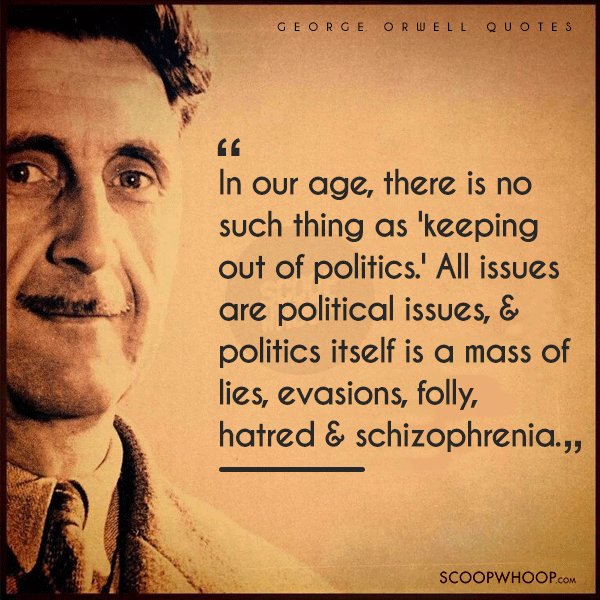
Today I will talk about politics and the English language again, but from a drastically different perspective.
I live in Malaysia, where the language you use is the subject of constant political discussion – Wherever you go on the Malaysian internet, it seems that people want you to not speak English, or at least it seems so, because there are so many comments from people who would prefer that you speak Malay, or that you don’t respect the national language.
Not a day seems to go by in this place where people treat what you speak as their business: They are deeply interested in whether you speak one language or another, and the English language is closest to the aggregate of all crosshairs in this country.
They consider the language that you use to be a non-neutral choice – a political choice that they do not agree with.
Some of these people say, as they complain and complain, that they would rather have you speak a language that they prefer rather than what you want to speak.
They consider it very much their business that you comply in order to make them feel better about the world.
Now, why is this so?
From having browsed the internet just enough to understand how many of these people think, I see that it is the fruit of a toxic mix of nationalism and an apparent misunderstanding of the entire purpose of language.
The whole point of what we are doing here is to communicate, to speak to one another, to genuinely exchange ideas that are meaningful between ourselves.
For some people though, that is not the purpose of language.
Rather, for them, the purpose of the words we use is not to communicate but to signify identity and allegiance.
Leaving aside the question of why such people are so insecure about their own identities, to the point that they think it is their business to intervene in what language another person speaks, it is sometimes interesting to think about how language can be a choice, one that we choose to make use of and to appreciate on our own terms.
Certainly, it is nice sometimes to spite people by conversing in a language that they do not understand and are unlikely to appreciate, but fundamentally spite is a very thin reason to excel in something.
On my part, at least, learning English was a matter of survival – to be able to do well in exams, to in turn have that performance feed into being able to do well on a scholarship assessment, and in turn now to be able to speak effectively to my audience, understanding and appreciating how my words may impact or entertain each one of you, and how to craft meaningful experiences for many more people in the days ahead, so that you will buy my books, join my memberships, or support me. (Sorry, not sorry!), but jokes aside, choices are political and they are not neutral.
So as it is a choice to master English so you can do well in your EFL exam, so it is another type of choice to develop that mastery so you can appreciate everything else that this language and the world that it makes legible for you.
Of the different worlds that a person can immerse themselves in linguistically, I think the English language offers one of the greatest and broadest spans of possible experiences and opportunities. It may seem trite, and people might object, but this is true and a reflection of my own personal experiences.
This is not to say that English cannot sustain an identity or that it would not be meaningful to do so, but identity alone cannot sustain a language – and we are not even going into the question of what it means for a person to have an identity!
Each person has their choice of what to speak, read, listen, and learn in, though.
What is your master language, and why? What are you using it for, and do you use it by choice, habit, or by compulsion? That’s some fun food for thought for you as you start out the day and continue it into the rest of your life. Thank you for reading.