Narrative writing

Seek First Clarity, Not Impressiveness – An English Teacher’s Opinion.

Victor Tan
 

Recently, I’ve had a lot of students mention in class that they want to learn how to write well by learning more advanced vocabulary.

I find a lot of students who just try their very best to write with flowery words because they’ve been convinced somehow or another that being able to write in an effective and incredible way is about using the most complicated words you know, and as long as they somehow look like they were lifted from a thesaurus or some sort of arcane lexical resource that you could spend hours looking through in order to find the meanings of words that you would never use in your entire adult life, then somehow or another you’d be on the right track to writing excellence.

Excellence capable of captivating entire generations from the touch of your pen; excellence flowing from your keyboard, flowing out onto the streams of the internet; excellence that stems from your fingers, your mind, the touch of your soul, the whatever it is that you are using in order to craft your nobly created works of art for the next generation…?

What a noble thought…

But in my opinion, what a horribly misinformed one.

As a teacher and as a writer, I am terribly conversant with words – and one thing that I know for sure is this:

The impressiveness of a speech or any piece of writing in this world does not come from how many flowery words went into it.

It does not come from the length of time that the author looked at a thesaurus and then somehow or another put in word vomit after word vomit, counting the pieces as they push them into an essay one after another, hoping that somehow or another all the little chunks alien and somehow inappropriate as they were would somehow elevate the essay into something better….

It’s understandable that someone might think that at the outset, considering how many famous pieces of prose are littered with beautiful words like that… But that is the exact same thing that Dr. Frankenstein thought he could do when he assembled his eponymous monster, piecing together body parts in order to recreate life.

When you put together the words from a thesaurus or any sort of lexical resource, what’s going to happen is that if they are not well combined, you’re not going to get an essay; you are going to get a jumbled together mess that seems impressive on the surface only to you because you’re not equipped with the skills necessary to evaluate just how good the piece actually is, and you’ve put something out that intuitively convinces anyone with skill in reading comprehension that you do not understand the English language.

The difference between writing an essay and the Dr. Frankenstein case is though that although you cannot recreate life by assembling together body parts…

You can in fact create a wonderful piece of writing if you know the rules necessary in order to create a piece of clear expression.

You can in fact craft communications that somehow or another make use of an understanding of the rules that go into creating those works, if you pay respect to the way that humans accept information, the way that psychology informs the way we take in knowledge, the way that our emotions rise and fall like tides on the sand, ever so fleeting and yet so dear.

You don’t magically become impressive because you’ve created a jumbled together mess of technical words.

You don’t wow me just because you’ve looked inside a thesaurus and have managed to find a few words that nobody ever uses.

You don’t impress me because you tried to show off and you succeeded in confusing yourself and confusing others.

You become understood when you clarify and you simplify, when you take things down from the heavens of technicality to the earth of simplicity, when you create relatability from the sands of obscurity.

You become a writer of note when your words make not just the otherwise bored examiner but even the small children who are listening to your words become captivated as they listen with the message that you’ve chosen to echo through your work.

You become valued when you give people value through writing that they can understand and that delivers a meaningful message that is valuable to them, and that applies whether you’re writing an essay, a summary, a Writer’s Effect piece, directed writing, or anything else that involves communication between yourself and another living, breathing human being.

It doesn’t require complicated words in order to know how to do that. It just requires you to be able to think of the things that matter and then learn how to express them in a way that conveys your thoughts.

Of course, that can be the work of a lifetime. It can be also the work that you do when you’re faced with an essay problem of course, but hey, that’s what you do everyday, isn’t it?

What’s for sure is that it’s definitely something that you will have to practice over and over again in the numerous scenarios when you write and communicate and somehow express yourself to the audience. It’s what you do. Chances are, it’s why you’re here.

And while you’re doing that, you will encounter this problem again and again – of messages not received, words not reaching their mark – until you face the demons of obscurity and, in conquering them, come forth with the clarity of mind and purpose to convey neither false sophistication nor a pretense of thinking that is predicated upon putting together difficult-looking words.

Rather, when you’ve arrived there, you will find that the most powerful messages are the ones that are most clear to mind.

You will see that what most directly influences the audience is a picture that they can immediately imagine, see, feel as if they were there, in the moment, in the midst of the action, as they share your thoughts, emotions, beliefs, convictions.

Think about that as you write your next essay, and consider how you can simplify and push your work directly into your audience’s heart. Through clarity comes power. Thank you for reading, and I will see you in the next piece!

Descriptive and Narrative Essay Banks Updated! (June 17th, 2023)

Victor Tan
 

Dear Premium members, I’ve updated the Descriptive Essay Bank!

Sorry this has been a bit spotty, but a number of things has been happening, namely group class arrangements, multiple trips to foreign countries, becoming a full-fledged corporate trainer, conducting the largest corporate training in Top Glove history, becoming a certified Artificial Intelligence consultant, and various other things of that nature.

That aside, I’ve been really enjoying conducting classes and learning how to get better as a teacher – work has been stepping up though, so it’s been a busy and fruitful time not only moving towards some goals of my own, but also enjoying the process of growing as a teacher and a person.

None of those are actually good excuses, but I thought that they might be interesting for you to know 🙂

I hope you’ll enjoy these pieces!

New Descriptive Essays:

New Narrative Essays:

Free IGCSE First Language English 2021 Sample Essays! (Narrative Composition)

Victor Tan
 

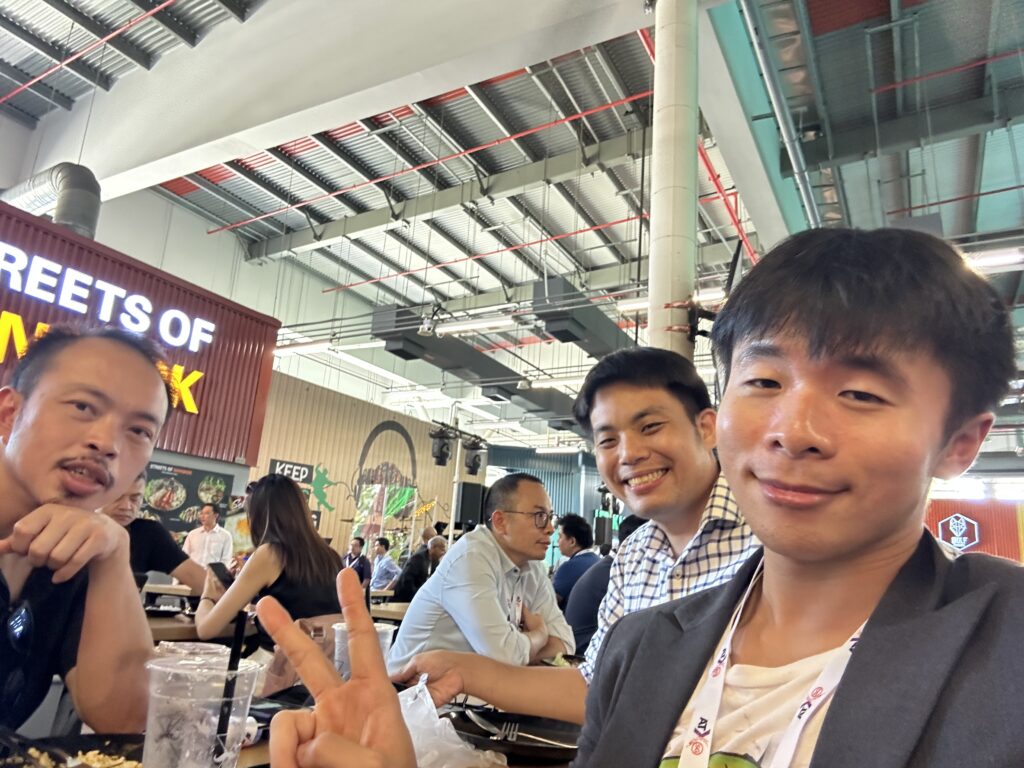
Hello everyone! I’ve been in Singapore this week meeting up with Mensa Singapore and also attending Singapore’s most prominent technology event, ATxSingapore.

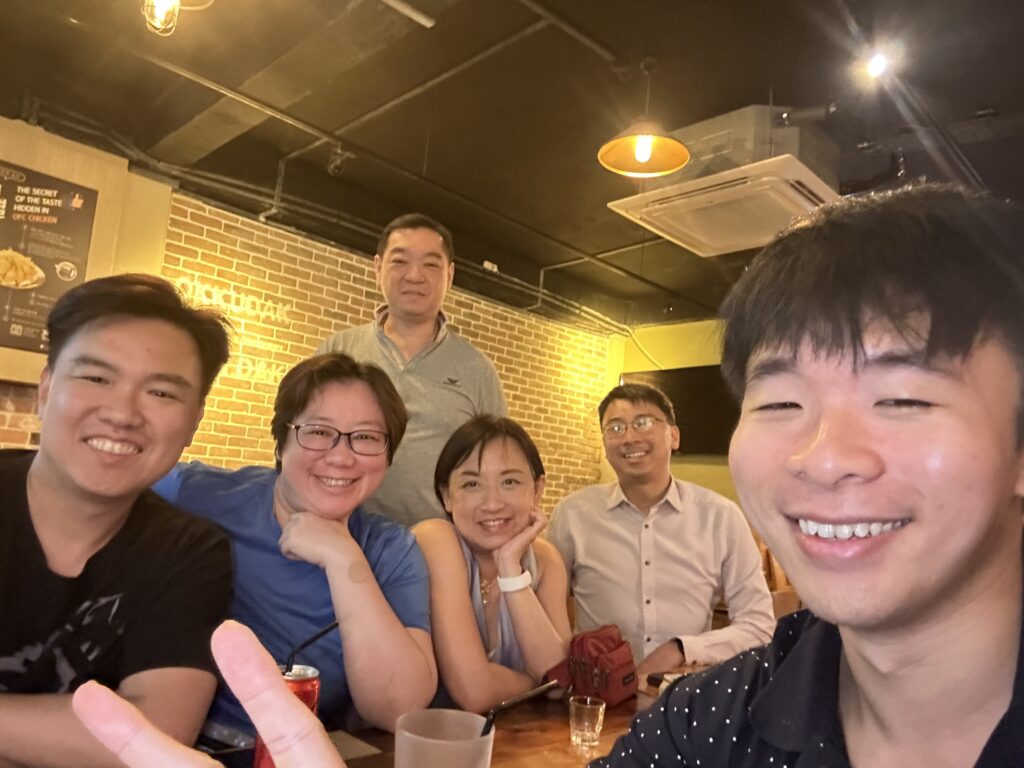
With Cerventus and Johann from Malaysia
With Mensa Singapore (we went to Korea together!)

It’s been a wonderful time of learning and experiencing, and needless to say, it’s been a busy time, but this week, it’s also been a pleasure to welcome a few of you into the group class that I’ve been conducting; I’ll speak more about that later, and look forward to welcoming more of you soon!

Anyway, here are two free narrative essays for you today, reflecting as always a deep emphasis on what is needed for you to succeed according to Cambridge’s criteria for excellence, which I hope you’ll find is very much aligned with the process of creating an engaging and entertaining story and which I hope you’ll remember to look at as you practice.

The first essay is provided on a free access basis to every single one of you, and to read the second one, you’ll need to have a free or premium site membership; do sign up, and enjoy the benefits!

Premium membership provides you with full access to essay samples published on the site. To sign up for premium, click here!

If you’d like to purchase our extremely well-reviewed book of essay samples (encompassing 2021 and 2022 narrative and descriptive essays), feel free to pick up your copy here 🙂

Meanwhile, enjoy the essays!

Prompt: Write a story which involves a mistake in the sending or receiving of a message.

Essay:

Amidst the cacophony of the bustling train station, Clara clutched her telegram with a fervor that turned her knuckles white. Time slipped like sand through fingers as the weight of the ink-laden paper bore into her soul. An unforeseen error in the telegram she sent to her brother, Anthony, during the Great War had summoned him to this very platform, moments away from embarking on his final mission.

Fleetingly, Clara recalled the hours spent crafting her message, each word imbued with love, comfort, and hope. A rogue tear traced its way down her pale cheek as she pondered the cruel twist of fate that a typographical mistake could wield such a devastating consequence.

Through the throngs of soot-stained travelers, a familiar silhouette took form. An ethereal beam of light seemed to crown Anthony’s war-weary head as they locked eyes. Embracing, the world around them momentarily faded into oblivion. His coarse uniform stood in stark contrast to the warmth of his presence.

“I’m here,” he whispered. “Your message, it brought me back.”

Clara’s heart throbbed painfully against her ribcage, each beat a plea for time to halt. The shrill whistle of the departing train gnawed at the air, and as they parted, she pressed a small envelope into his hand. “My heart goes with you,” she murmured.

Months later, a letter arrived, clad in military regalia. Her hands shook as she read the words of her brother’s comrade: “He spoke of you every night, and your letters were his sanctuary.”

As she clutched the envelope Anthony never opened, Clara realized the profundity of her unintended message. It had summoned him back to the tender embrace of love, if only for a fleeting moment.

Days turned to weeks and weeks to months, as Clara felt a part of her soul cleaved with her brother’s absence. In her room, the air heavy with dust and memories, she penned letters, one after the other, like laying bricks in the walls of a house she would never live in. They remained sealed, addresses blank; these were letters she could never send.

In the tapestry of her heart, each thread was woven with echoes of their last goodbye, and how an error, a mere butterfly, had sent ripples through their lives.

As the first snow of winter settled upon the graves of the soldiers, Clara stood before Anthony’s grave. She finally felt that the weight she had been carrying for months had lessened, as if the snow was taking some of it upon itself.

In her hand was the last letter she would ever write to him. She buried it there, with him, and whispered to the wind, “Wherever you are, find peace, for in your heart, I found mine.”

Comment:

The content (W1) is engaging and has depth, portraying the emotional journey of Clara. The additional details such as “letters she could never send” add layers to her character.

The structure (W2) is secure and well-balanced, with the addition of Clara’s life after receiving the military letter and her final act, providing a complete arc.

Precise vocabulary (W3) is used, such as “the tapestry of her heart”, evoking imagery. The register (W4) is consistent with a historical and emotional tone. Spelling, punctuation, and grammar are accurate (W5).

To improve, the essay could delve into the moment of the error to enhance suspense. The phrase “the air heavy with dust and memories” could have included more sensory details.

A book such as “All the Light We Cannot See” by Anthony Doerr could be an invaluable resource for the writer. The novel’s use of intricate imagery, rich character development, and its ability to weave emotions through the tapestry of war could be especially beneficial. Emulating Doerr’s writing, the writer can further imbue the narrative with textured descriptions that breathe life into each scene.

Mark awarded for content and structure = 15/16
Mark awarded for style and accuracy = 23/24
Total marks awarded = 38/40