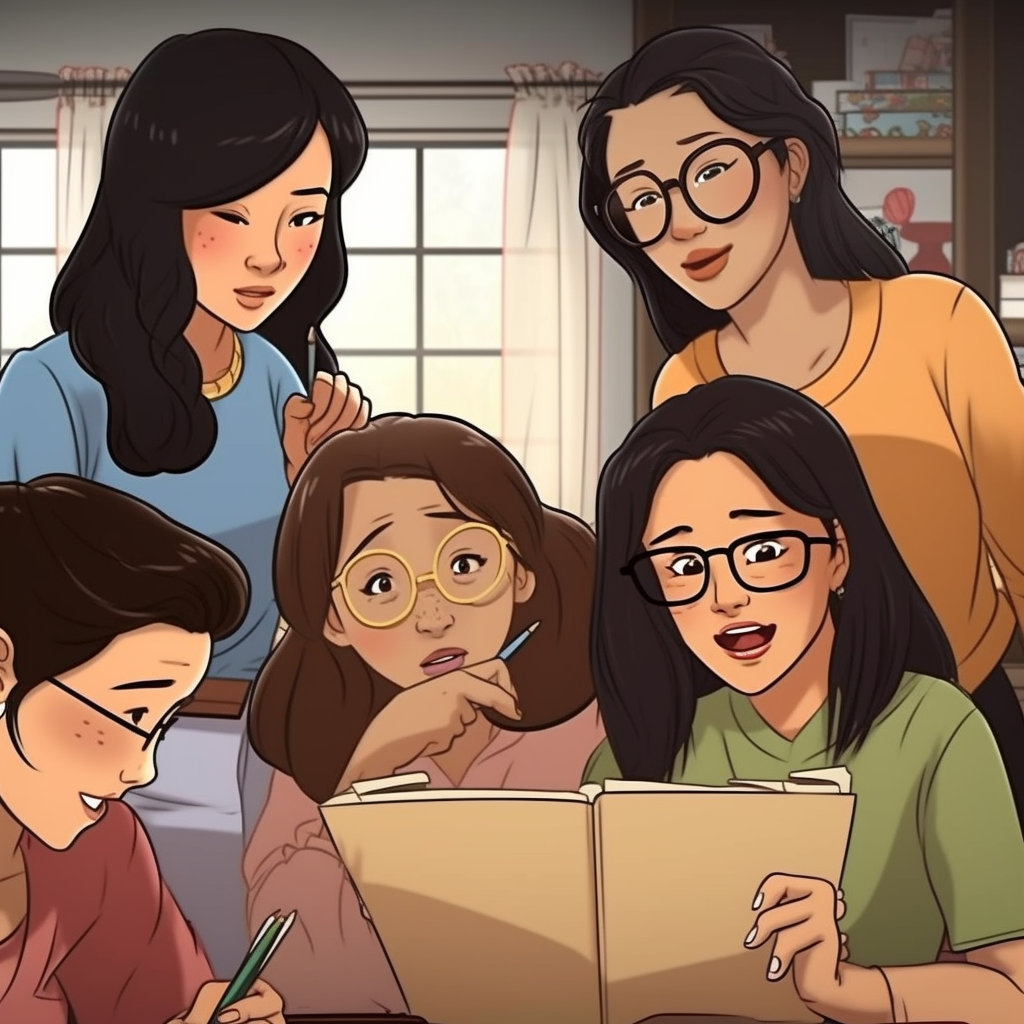

I thought to make this post this morning for those of you who are reading this blog and taking in the advice that has been included here, which is the fruit of many years of writing and reading, and learning how to develop rhetorical skills from intensive practice.
This post will be a bit more informal and is dedicated to those of you out there who have lots of great examples in front of you – but somehow can’t really make the transition towards writing.
There are no theories in this post, and it is not specific to IGCSE First Language English – these are just simple suggestions that I’ve picked up from my own experiences.
Ready?
Let’s go!
First off… What is excellent writing?
I think that often, people have a limited sense of what ‘good’ writing is. They confine themselves to an understanding of writing as something that’s siloed into sample essays and the things that they read in school.
In reality, many students would benefit from taking a wider perspective to what excellent writing is and where they can learn from. After all, it ’s not just embodied in sample essays – it’s also embodied in the writings of your favorite columnist in the New York Times or New Yorker, the most gripping pages of your favorite book…
But it’s not that limited – it also encompasses the lyrics of your favorite song, the plot of your favorite manga, and everything in between.
I call all of these types of writing excellent writing because in some way or another, they appeal to you in a deep, visceral way; they call out to you and say to you: Read me, keep reading me, and don’t stop!
Even better – you don’t have to be persuaded to keep reading – why? Because you just keep on going subconsciously because it’s interesting to you!
That said, I acknowledge that people do have vastly different preferences and that people may not know what’s best to learn from.
Second of all… Where do you find excellent (English) writing?
As I mentioned in my previous point, you can look to the New York Times and The Guardian for good journalism. I would have liked to cite The Star, but a recent article about the students who were admitted to Harvard from Malaysia in 2023 has left me questioning this.
The Economist, The Edge (Malaysia), and Nikkei Asia are incredible if you like business and economics news, and Time Magazine and The New Yorker are wonderful if you like long-form journalism.
There are numerous other examples that I can offer you as well, but I think that these are good to start.
I’ll include many more examples in the resources page when I get the time to write (work and teaching has been busy lately!)
On a more literary note, good non-fiction and fiction books most often serve as good sources of writing inspiration and are a joy to read as well; most of the sample essays that I post in the narrative and descriptive composition bank come with book recommendations attached to them to encourage the writer to level up by means of learning how to write well. Check that out here!
We will soon create worksheets and notes for sale that will help you practice these as well – stay tuned!
Okay, enough advertising!
Let’s dive in!
How do you learn from excellent writing?
Two people can read a book and then come out with vastly different insights, thoughts, learnings – why? It is often because they used different strategies to understand what was written within. You will know this to be true if you discuss a book with someone who has read it effectively – they will recall quotes, ideas, characters, and things that you may not even remember while you are struggling to recall the events that occurred in the text!
How can you level up to make sure that you can do this in your own life?
Well, let’s begin!
Here are eight tips to learn from good writing!
1. Look for good writing.
Perhaps this should be obvious, but if you don’t actively look for good writing or have a habit of seeking it out, you’re not going to find any. Try to develop a habit of looking for things that interest you and that you think can help you learn in some small way.
Don’t try to just start reading like crazy towards the days before the exam, because that’s not going to work. You are looking for a slow burn – a situation whereby you have a good habit of reading and learning about things that you enjoy. There are many good things out there that you can learn from, and what you need most is not to look for the ultimate source of reading – what you need to do is to just start reading.
Incidentally, since you’re still reading this piece, would it be too much to say that this blog post itself is an example that you can learn from?
…ANYWAY! NEXT TIP!
2. Ensure that you understand what was being said before you progress.
…Whoa whoa whoa whoa whoa!
Hold up!
I understand that the temptation to read is great for you and you deeply want to progress because you’ve read this site, but before you move on…
Do you understand what the author is saying? If not, then please go back and read it again. That’s what you have to do when you’re learning anything – if you don’t have a strong foundation of understanding, you will suffer in the process of moving forward because you do not know what is happening in the first place and you will take more time in the future to try to understand it.
Do yourself a favor and try to clarify what was being said, and if necessary, enlist assistance from your teachers, tutors, or parents.
It may take a little extra time and you may in turn find yourself asking even more questions about the text, but that’s totally normal and completely fine – the more questions you ask about a text and the more you find yourself able to answer, the better you are going to be at dealing with texts in general, and the more your speed will increase. You may not enjoy hearing this, but it takes time, patience, and diligent effort.
Okay, now armed with that unpleasant truth, let’s head on to the next part!
3. Constantly learn vocabulary.
We spoke about the importance of foundations in the last point. Well, what’s more important when you’re reading a book, a paragraph, or even a sentence than the words that make them up?
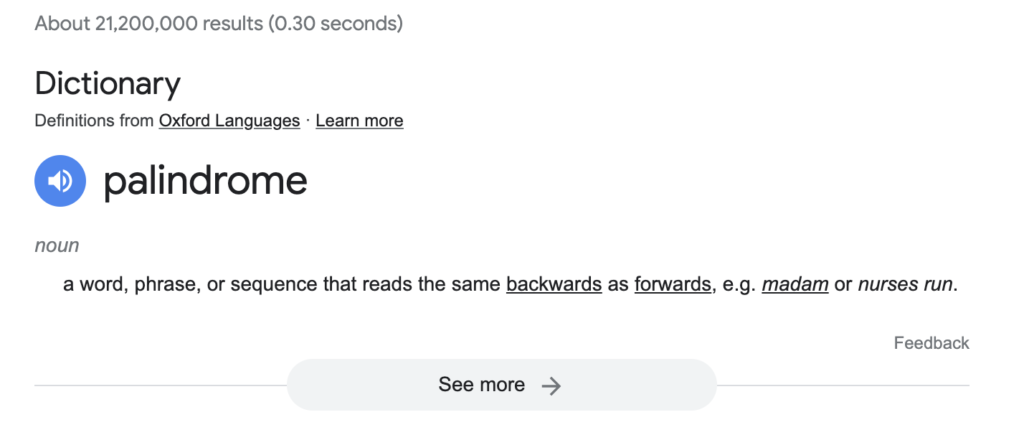
If you read a lot, you won’t be a stranger to the fact that authors can use many different forms of words, sometimes in different contexts that require you to think about what they mean, and even occasionally in special ways that reflect their particular understanding or sense of the word itself.
While it’s true that the onus of creating an effective piece is ultimately on the writer, it doesn’t change the fact that you as the reader need to do your part by learning words constantly.
Make it a habit rather than something that you just think about doing intermittently or when you’re under pressure; do it the moment you see something that doesn’t make sense. Over the course of days, months, and years, you are going to observe dramatic improvements that will come into your rhetorical abilities that you won’t even realize until they arrive.
4. Actively analyze the structure of what you are reading.
Once you’ve come to understand the basic meaning of what the author is trying to say to you, take the effort to step back and see if you can appreciate the wider picture – to see the forest for the trees, rather than to appreciate an individual tree as the embodiment of a universe unto itself.

Often times, people simply mindlessly consume what has been placed in front of them.
I encourage you not to take that approach.
Take some time to understand the structure of what you are reading – how it is organized, where the key information and points are (if it is an argument), or how the plot progresses (if it is a story). How is it held together? What are the different parts of the text? Ask yourself if you can tell the direction of movement of the text.
5. Ask yourself questions.
Do ask yourself questions as you read.
What did the author say in the first paragraph? What was his conclusion? How did he support that conclusion? Did it make sense?
Thinking about these things from a distance can be very helpful in terms of helping you to understand how texts are structured, and in turn assist you in developing a larger picture about a text that is infinitely more all-encompassing than the words on a page alone.
As you ask questions, you’ll perhaps come to see that knowledge is not just those printed words – rather, it is like a tree that grows from a foundation with interconnected branches that link different parts of your understanding together in a coherent and unified conception or picture of things. As a reader, it is your duty to maintain the conditions that will allow the tree to grow, by stimulating it with questions and thoughts that facilitate its growth.
As you ask yourself questions and reflect, there is one thing that you must absolutely do, and that is to…
6. Reflect on the author’s purpose and intended audience.
Recognize as you read that every single piece of writing is a piece of communication that is directed towards a specific purpose.
Yes, even comic books and manga.
Their purpose is to entertain you so that you will buy the books or continue reading.

Alright, that was the clearest example right there – the rest should be pretty simple to get across.
As you can see, writers can persuade you to keep reading by entertaining you, but they can also persuade you (perhaps to accept a certain point of view?) by educating you, or perhaps aim to argue a certain point, or convince you of something that you didn’t believe before.
If this all seems to dovetail together, it’s not a coincidence.
All effective communication is purposive – it aims to achieve specific outcomes, and it will manage to do so if it targets the right audience and manages to persuade them in the correct ways.
This isn’t just to tell you, please learn how to write a persuasive essay, structure a good argument well, learn how to reason correctly…
But it is also to tell you, every single piece of writing in this world, including this post, is an example of language with purposive communication.
Don’t just accept it straight away or take it as fact. Rather, critique it. See if you understand it. See whether even if you understand it, whether what it’s saying is true or not as you develop a consciousness of how you are being influenced by it – do not take what it is describing as reality, but rather integrate it into your own reality and your own understanding of how the world works.
7. Practice writing.
Congratulations! You have come to the end of this piece (almost!)
Now please don’t just let the advice within flow out of your brain – rather, put it into practice.
Look at your favorite pieces of writing, and see if you can try to recreate the style in your own words, if you can integrate some of the structures, if you can appreciate the themes and what the authors were trying to get across and formulate the arguments in your own words.
Let’s be realistic: You won’t be able to imitate your favorite writers completely – but then again, you shouldn’t try to.
I don’t know who you are (anyone could be reading this) or how you feel about writing… But if you are anything like me, you may feel sometimes that you are fighting a battle to become more eloquent, more rhetorically inclined, better at expressing things that feel like they come from somewhere unknown but yet are fighting to seek out a pathway towards existence.
By practicing and learning from good examples, you will create words upon the page, moving forward with each letter that you type; you will converge closer and closer to your unique style.
Is that your goal? I have no idea. But that’s why the last tip is important.
8. Find your why.
Here is a quote from the German philosopher Friedrich Nietzsche that I’ve always found fascinating, and thought to share with you today.
“He who has a why can endure almost any how”.
– Friedrich Nietzsche.
I’d like to contextualize that to writing.
Writing well is hard.
To learn how to write well, you will have to learn many, many different things, many of which may be far beyond the current scope of your abilities and many of which you may never have even thought about before; many of you, even upon reading this, will experience a brief burst of motivation but later declare that you have given up – only to come back to this page many years later and recognize that there was a certain truth in what I had said – the thing that had caused you to return here somehow to these words that had somehow occupied a space in your memories and to reflect upon what I had said.
In these moments, I hope that you will remember why you read this post, and why you felt the necessity to become a better learner.
Were you just looking forward to a better grade on the IGCSE, perhaps just to meet those A01 and A02 assessment objectives? (You should, and you will!)
Or were you looking forward to something even greater than that?
What was your goal?
Your purpose?
Let’s move away from the past tense.
What is your purpose now?
What do you want to achieve by becoming a better writer?
How can learning how to read and write higher level elevate your life, your ability, your vision to see the world as you contemplate how to express the multitudes of experiences, colors, and people who will enter into it as you build up the conditions for a better life through your thoughts, words, and actions?
As you ask yourself these questions throughout the course of the years, know that these questions are what will power you through the difficult times and that will give you the strength to direct your efforts continually towards improvement.
As you think about these things, allow me to close.
Conclusion
Learning from good writing is a lifelong journey. It requires you to look for good writing, to analyze what you are reading, to learn the words that are being used, to analyze the structure of what you’re reading so you can understand how it fits together, to reflect on the author’s purpose, to practice assiduously, and finally, to know why you are doing this, on a level that is beyond what your parents have said, what society has told you about learning to write or to read, on a level that is distinctly, wholly, uniquely, and personally yours.
I hope you’ve enjoyed this piece on learning how to write well; if you found it valuable, do consider sharing it with others as well. I look forward to seeing you in the next post!
V.